
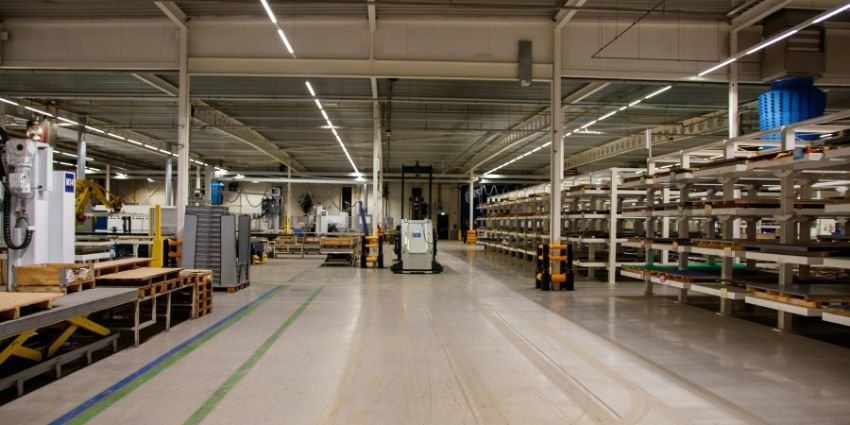
Industrial clients require automated cleaning reports — not verbal updates or end-of-month summaries. Real-time data with timestamps, geolocation check-ins, task logs, and photos delivers the compliance, safety documentation, and operational transparency factories and warehouses demand. Manual reporting can't keep up.
I've run commercial cleaning crews for 13 years. Industrial accounts were the ones where a missing log wasn't a complaint — it was a safety audit finding. We'd hand over a stack of paper at month-end and hope nobody asked about Tuesday's restricted-zone clean. Automated cleaning reports changed the conversation from "trust us" to "here's the record."
The Unique Cleaning Demands of Industrial Facilities
Industrial facilities operate at scale with high-risk zones, restricted areas, and compliance-heavy workflows. Multiple shifts, crews, and service frequencies compound the complexity.
Precise documentation supports audits and safety reviews. Cleaning in these environments maintains safety and operational standards — not just appearance. Gaps in documentation can trigger fines or shutdowns.
Why Manual Reporting Falls Short in Industrial Cleaning
Paper logs and verbal updates are inaccurate and incomplete. Delayed reporting hides missed services in critical zones.
Without real-time visibility, managers and clients can't confirm compliance during audits or incidents. Service credibility erodes when records aren't immediate and verifiable.
What Are Automated Cleaning Reports?
Automated cleaning reports collect real-time data through timestamps, geolocation check-ins, task completion logs, photos, and digital signatures. They replace static spreadsheets and PDFs with dynamic, verifiable records.
Every task is documented with evidence. Transparency and reliability that manual methods can't match — especially when integrated with proof of service software.
Why Industrial Clients Demand Automated Reports
- Compliance & Audit Readiness: Immediate access to verified service records for regulatory inquiries.
- Safety & Risk Reduction: Proof that cleaning occurred in regulated zones.
- Operational Transparency: Visibility across shifts, crews, and locations in real time.
- Accountability: Clear evidence of who performed what work and when.
- Faster Issue Resolution: Identify gaps before they become failures.
Business Benefits for Industrial Cleaning Providers
- Stronger Trust and Long-Term Contracts: Reliable real-time reports build lasting relationships.
- Reduced Disputes: Concrete evidence minimizes scope and frequency disagreements.
- Easier Contract Renewals and Upsells: Transparency smooths renewals and surfaces additional needs.
- Competitive Differentiation: Automated reporting stands out in RFPs and bids.
What Industrial Clients Will Expect Next
- Live Dashboards: Real-time cleaning data instead of static reports.
- Automated Exception Alerts: Immediate notification when protocols deviate.
- Integrated Compliance and Safety Documentation: Cleaning reports tied to broader compliance systems.
- Data-Driven Performance Benchmarks: Analytics that drive continuous improvement.
Frequently Asked Questions
Why do industrial facilities have unique cleaning demands?
Factories, warehouses, and plants include high-risk zones, restricted areas, and compliance-heavy workflows across multiple shifts. Cleaning supports safety and operations — not just appearance — and requires precise documentation for audits.
Why does manual reporting fail in industrial cleaning?
Paper logs and verbal updates are inaccurate, delayed, and incomplete. Without real-time visibility, missed services in critical zones go unnoticed until an audit or incident exposes the gap.
What are automated cleaning reports?
Real-time data collection through timestamps, geolocation check-ins, task completion logs, photos, and digital signatures — replacing static spreadsheets and PDFs with verifiable, up-to-the-minute records.
Why do industrial clients demand automated reports?
Compliance and audit readiness, safety and risk reduction, operational transparency across shifts, crew accountability, and faster issue resolution before small gaps become failures.
What business benefits do automated reports bring cleaning providers?
Stronger trust and long-term contracts, fewer disputes over scope or missed services, easier renewals and upsells, and competitive differentiation in RFPs and bids.
Conclusion
Automated cleaning reports are a baseline requirement in industrial environments — not a luxury. Transparency, compliance, and trust drive client expectations. Modernize reporting before the next audit, and pair automated records with live visibility so industrial clients see service delivery as it happens.